
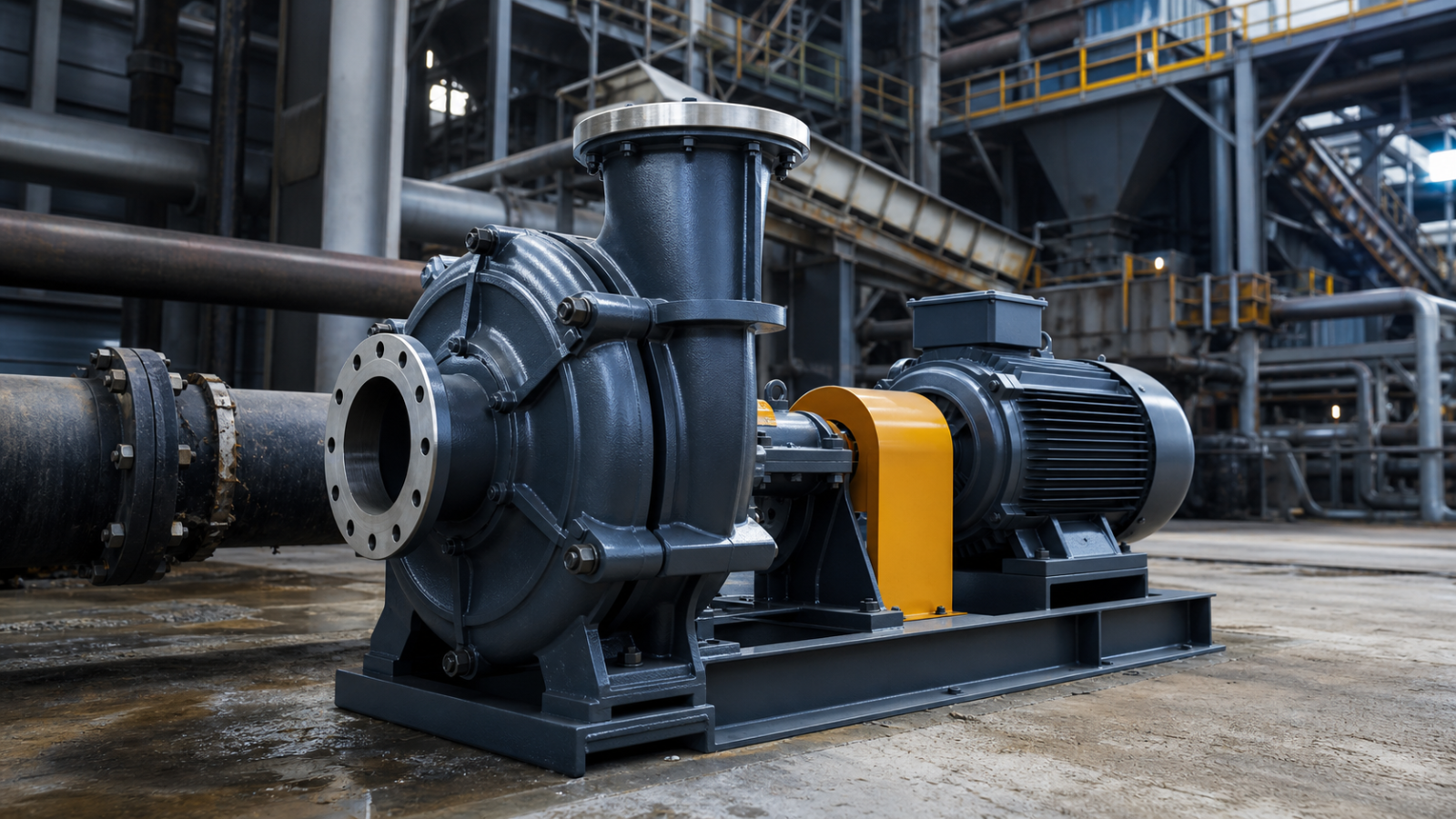
The global slurry pump market is experiencing significant and sustained growth, driven by expanding industrial applications and the continuous need for reliable fluid handling solutions in harsh environments. As industries such as mining, metallurgy, and power generation scale their operations, the demand for robust slurry pumps has surged. This article explores why slurry pumps are highly sought after, delving into market dynamics, core product features, and the critical role these pumps play in modern industrial processes.
Market Dynamics: Why Slurry Pumps Are Selling Fast
The slurry pump market is projected to grow steadily, with estimates suggesting it will reach USD 1.87 billion by 2035, growing at a Compound Annual Growth Rate (CAGR) of approximately 3.3% from 2026. A more aggressive forecast anticipates the market could reach USD 3.77 billion by 2031, with a higher CAGR of 5.27%. This robust growth is primarily fueled by the burgeoning applications in the mining industry, coal mines, and ash handling facilities.
Slurry pumps are indispensable for transferring thick, abrasive fluids with high solid content—such as mineral slurries, coal ash, and dredged sand. Unlike standard water pumps, slurry pumps are engineered to withstand extreme wear and tear, making them essential for continuous operations in heavy industries. The rising deployment of heavy-duty vertical and horizontal slurry pumps is a direct response to the need for efficient material transport and processing in these sectors.
The key industries driving demand include:


Mining and Minerals Processing: This is the single largest application for slurry pumps. From conveying ore slurry from grinding mills to feeding hydrocyclones, slurry pumps are the circulatory system of any mineral processing plant. The global expansion of copper, gold, iron ore, and lithium mining—driven by the energy transition—is directly fueling demand.
Power Generation (FGD Systems): Coal-fired power plants use slurry pumps extensively in Flue Gas Desulfurization (FGD) systems, where limestone slurry is used to scrub sulfur dioxide from exhaust gases. Even as coal declines in some markets, the need to maintain existing plants ensures continued demand.
Dredging and Marine Construction: Dredge pumps are a specialized form of slurry pump used to transport sand, gravel, and silt from waterways, harbors, and coastal areas. Infrastructure development and land reclamation projects globally sustain this market segment.
Construction and Tunneling: Slurry pumps are used in tunnel boring machine (TBM) operations to remove excavated material mixed with water (slurry) from the tunnel face.
Product Analysis: Engineering for Extreme Conditions


The commercial success of slurry pumps is deeply rooted in their specialized engineering. A slurry pump is a centrifugal pump designed to handle highly abrasive and high-density slurries. The core of its design philosophy focuses on durability, wear resistance, and hydraulic efficiency under challenging conditions.
Core Components and Design Features
The pump casing is typically manufactured from cast or ductile iron. External reinforcing ribs protect the internal wear liners and enable the pump to withstand high working pressures . The casing is often designed in two halves, allowing for easy access to the internal components during maintenance.
The impeller is the heart of the pump, responsible for imparting kinetic energy to the slurry. Slurry pump impellers are designed to minimize backflow and sealing damage, often featuring pump-out vanes on both the front and rear shrouds. Depending on the application, impellers can be made from solid high-chrome alloy or formed rubber.
Replaceable liners are a defining feature that separates slurry pumps from standard centrifugal pumps. Rather than allowing the expensive casing to wear, the pump uses sacrificial liners—made of hard metal or elastomeric rubber—that can be replaced at a fraction of the cost of a new pump. These liners are attached mechanically, not adhesively, ensuring a secure fit and easy removal.
The throatbush features tapered mating faces that allow for precise positive alignment during assembly. This design reduces wear at the critical junction between the rotating impeller and the stationary casing, and simplifies removal during maintenance.
Shaft seals are available in three primary configurations: mechanical seals (for clean flushing water environments), packing seals (for applications where some leakage is acceptable), and centrifugal seals (which use the pump’s own rotation to expel solids from the seal area).
|
Component |
Function |
Design Highlight |
|
Casing |
Contains pressure; protects internal parts |
Cast/ductile iron with external reinforcing ribs |
|
Impeller |
Transfers kinetic energy to the fluid |
High-chrome or rubber; pump-out vanes on both shrouds |
|
Liners |
Sacrificial wear protection for the casing |
Interchangeable hard metal or elastomer; mechanically attached |
|
Throatbush |
Directs flow into the impeller eye |
Tapered mating faces for precise alignment |
|
Shaft Seal |
Prevents slurry leakage into bearings |
Mechanical, packing, or centrifugal seal options |
Table 1: Key Slurry Pump Components and Their Functions
The Role of Material Selection in Market Success

A significant factor contributing to the high demand for slurry pumps is the availability of diverse materials of construction (MOC). Manufacturers offer pumps with various liner and impeller materials to suit specific slurry characteristics, such as particle size, shape, and chemical composition.
For instance, natural rubber (NR) liners are highly effective for pumping slurries with fine, smooth particles. The rubber absorbs impact energy and resists sliding abrasion, providing a long service life in applications like fine silica tailings. Conversely, high-chrome white iron (e.g., A05 alloy) is the preferred choice for coarse, angular solids, offering exceptional resistance to cutting and gouging. The ability to tailor the pump’s material to the specific application ensures optimal performance and reduces the total cost of ownership (TCO), making these pumps highly attractive to industrial buyers.
Frequently Asked Questions
Q: What is a slurry pump used for?
A slurry pump is a type of centrifugal pump specifically designed to transport highly abrasive, high-density mixtures of liquid and solid particles—called slurries. Primary applications include mining (ore transport, cyclone feed), dredging (sand and gravel), power generation (coal ash and FGD limestone slurry), and construction (tunneling).
Q: How is a slurry pump different from a water pump?
A standard water pump is optimized for hydraulic efficiency with clean liquids. A slurry pump is engineered for durability and wear resistance. It features thicker casing walls, replaceable wear liners, specialized impeller designs with wider passages, and materials (high-chrome alloy or rubber) that can withstand the abrasive and corrosive nature of solid-laden fluids.
Q: What is the global slurry pump market size?
The global slurry pump market is valued at approximately USD 1.2 to 2.8 billion and is projected to grow at a CAGR of 3.3% to 5.27% through 2031–2035, driven primarily by the mining and power generation industries.
Conclusion
The high demand for slurry pumps is a testament to their critical and irreplaceable role in heavy industries. By combining robust engineering with versatile material options, these pumps offer reliable performance in the most demanding environments. As the mining and processing sectors continue to grow—particularly driven by the global demand for battery metals and the energy transition—the slurry pump market will undoubtedly follow suit.
