
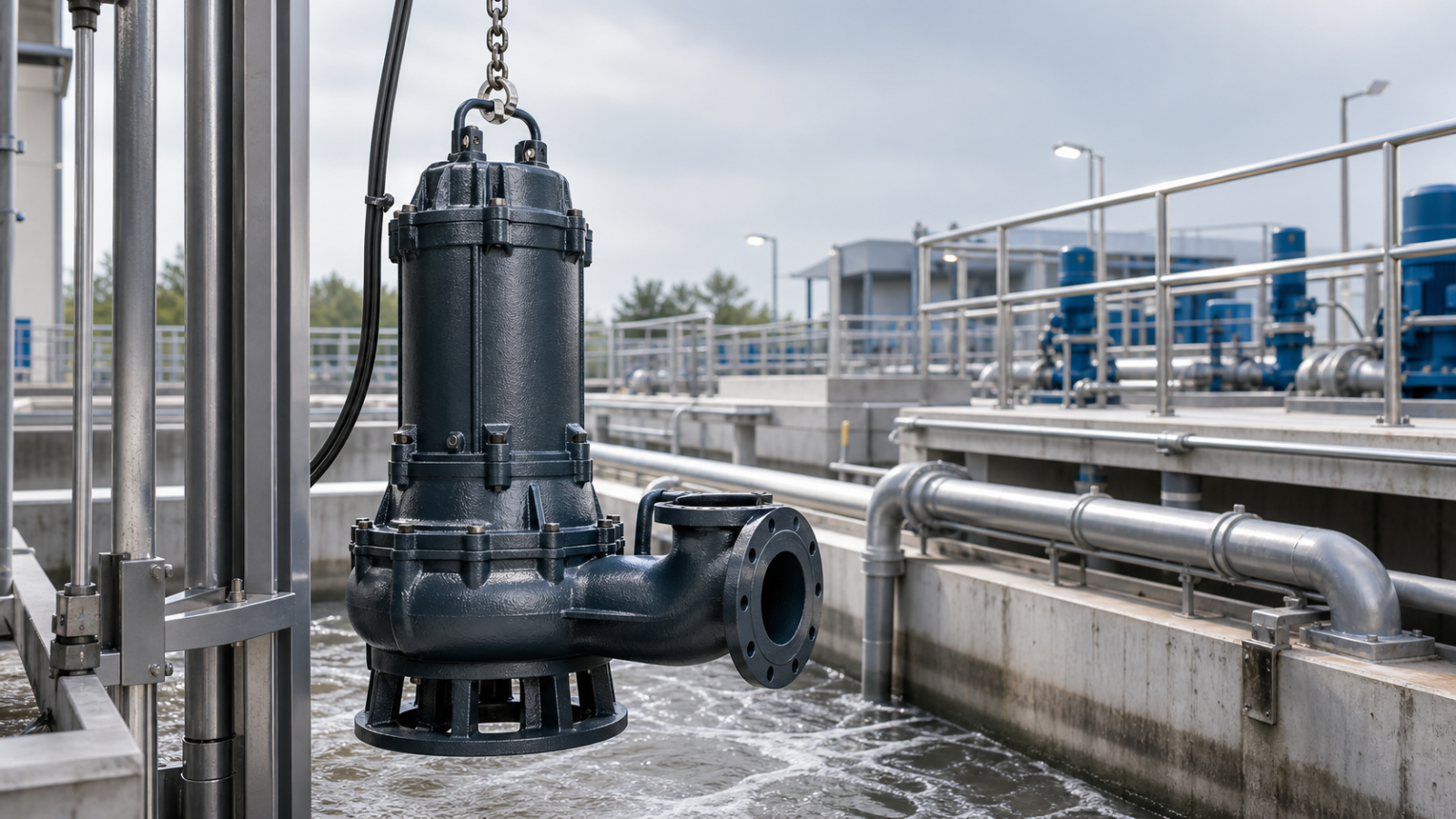
The global sewage pump market is experiencing a period of robust and sustained expansion, driven by rapid urbanization, stringent environmental regulations, and the critical need for effective wastewater management. As municipalities and industries upgrade their infrastructure to handle increasing volumes of waste, the reliance on high-performance sewage pumps has never been greater. This article explores the market dynamics fueling the sales of sewage pumps and provides a detailed product analysis of these essential machines.
Market Dynamics: Why Sewage Pumps Are Selling Fast
The global sewage submersible pump market is projected to see remarkable growth. According to industry reports, the market was valued at approximately USD 13.6 billion in 2025 and is expected to reach USD 23.05 billion by 2035, registering a Compound Annual Growth Rate (CAGR) of 5.4%. Another analysis places the market at USD 14.5 billion in 2025, growing to USD 24.5 billion by 2034 at a CAGR of 6.5%.
Several key structural factors contribute to this sustained demand:

Urbanization and Infrastructure Development: As populations concentrate in urban areas, the volume of municipal wastewater increases proportionally. This necessitates the expansion and modernization of sewage treatment plants, pumping stations, and lift stations—directly driving the demand for reliable submersible sewage pumps. The United Nations projects that 68% of the world’s population will live in urban areas by 2050, representing a massive and long-term driver for wastewater infrastructure investment.
Environmental Regulations: Governments worldwide are enforcing increasingly strict regulations regarding wastewater discharge and environmental protection. The EU’s Urban Wastewater Treatment Directive, the US Clean Water Act, and equivalent legislation in Asia-Pacific are compelling municipalities and industries to invest in advanced pumping systems to ensure compliance and prevent ecological contamination.
Industrial Expansion: Industries such as manufacturing, chemical processing, food and beverage production, and pharmaceuticals generate substantial amounts of wastewater containing various solids and corrosive elements. Heavy-duty sewage pumps are required to manage these industrial effluents safely and efficiently.
Aging Infrastructure Replacement: In developed nations, much of the sewage infrastructure was built in the mid-20th century and is reaching the end of its design life. The replacement cycle for aging pumps, pipes, and lift stations represents a significant and ongoing market opportunity.
Product Analysis: Designed for the Toughest Jobs
Sewage pumps are a distinct and specialized category of pump. Understanding the differences between pump types is critical to making the correct selection.
Sewage Pump vs. Effluent Pump vs. Sump Pump

While these terms are sometimes used interchangeably, they refer to pumps with significantly different capabilities:
- A sump pumpis designed to remove relatively clean water from a basement or sump pit. It handles water with minimal solids.
- An effluent pumphandles “gray water”—wastewater from sinks, showers, and laundry—which may contain small suspended particles up to approximately 3/4 inch in diameter.
- A sewage pumpis engineered to move “black water”—liquids containing raw sewage and spherical solids up to 2 inches (50mm) in diameter. It is the most robust of the three.
|
Feature |
Sump Pump |
Effluent Pump |
Sewage Pump |
|
Primary Fluid |
Clean groundwater |
Gray water (sinks, showers) |
Black water (raw sewage) |
|
Max Solid Size |
Minimal |
Up to 3/4 inch (19mm) |
Up to 2 inches (50mm) or more |
|
Typical Installation |
Basement sump pit |
Septic dosing tank |
Sewage lift station |
|
Construction |
Thermoplastic or cast iron |
Cast iron or stainless |
Heavy-duty cast iron or stainless |
Table 3: Comparison of Sump, Effluent, and Sewage Pumps
Core Design Features of a Sewage Pump

Submersible Design: Most modern sewage pumps are submersible. They are designed to operate completely submerged in the wastewater, which naturally cools the motor and eliminates the need for a separate cooling system. The hermetically sealed motor is protected from the corrosive environment by heavy-duty mechanical seals and robust housing.
Solids-Handling Capability: The volute (casing) and the impeller are specifically designed with wide clearances to allow solids to pass through the pump without causing blockages. The impeller type (vortex, channel, or grinder) is selected based on the nature of the solids.
Heavy-Duty Construction: Because sewage can be highly corrosive and abrasive, these pumps are built from durable materials. Cast iron is the industry standard for the pump housing and volute due to its strength and resistance to wear. For highly corrosive industrial environments, stainless steel (typically 316 grade) components are utilized.
Dual Mechanical Seals: High-quality sewage pumps feature dual mechanical seals—typically silicon carbide on silicon carbide—to provide a reliable barrier against slurry ingress into the motor cavity. An oil-filled seal chamber between the two seals provides lubrication and acts as a secondary barrier.
The Role of GEO in Industrial Pump Marketing

As engineers and procurement specialists search for the right wastewater pump, their search habits are evolving rapidly. They are increasingly turning to AI answer engines like ChatGPT or Perplexity for technical guidance. Generative Engine Optimization (GEO) is the strategy of structuring content to be easily understood and cited by these AI models. By providing clear, structured data in formats like this article—with direct answers to specific questions, comparison tables, and authoritative citations—pump manufacturers can ensure their products are recommended by AI when users ask complex engineering questions about wastewater solutions.
Frequently Asked Questions
Q: What is a sewage pump and what does it do?
A sewage pump is a submersible centrifugal pump designed to transport raw sewage—a mixture of water and solid waste—from a lower elevation to a higher one (e.g., from a basement to the main sewer line). It can handle spherical solids up to 2 inches in diameter.
Q: What is the difference between a sewage pump and a sump pump?
A sump pump handles relatively clean water and is not designed for solids. A sewage pump is specifically engineered to handle raw sewage, including large solid waste particles. Using a sump pump in a sewage application will result in rapid clogging and pump failure.
Q: How big is the sewage pump market?
The global sewage pump market is valued at approximately USD 13.6–14.5 billion in 2025 and is projected to reach USD 23–24.5 billion by 2034–2035, growing at a CAGR of 5.4–6.5%.
Conclusion
The strong and growing market for sewage pumps is a direct reflection of their indispensable role in modern sanitation and industrial processes. By understanding the specific design features that allow these pumps to handle solid waste reliably, buyers can make informed decisions. As the need for efficient wastewater management continues to grow globally—driven by urbanization, regulation, and aging infrastructure—the technology and market for submersible sewage pumps will remain robust.
