
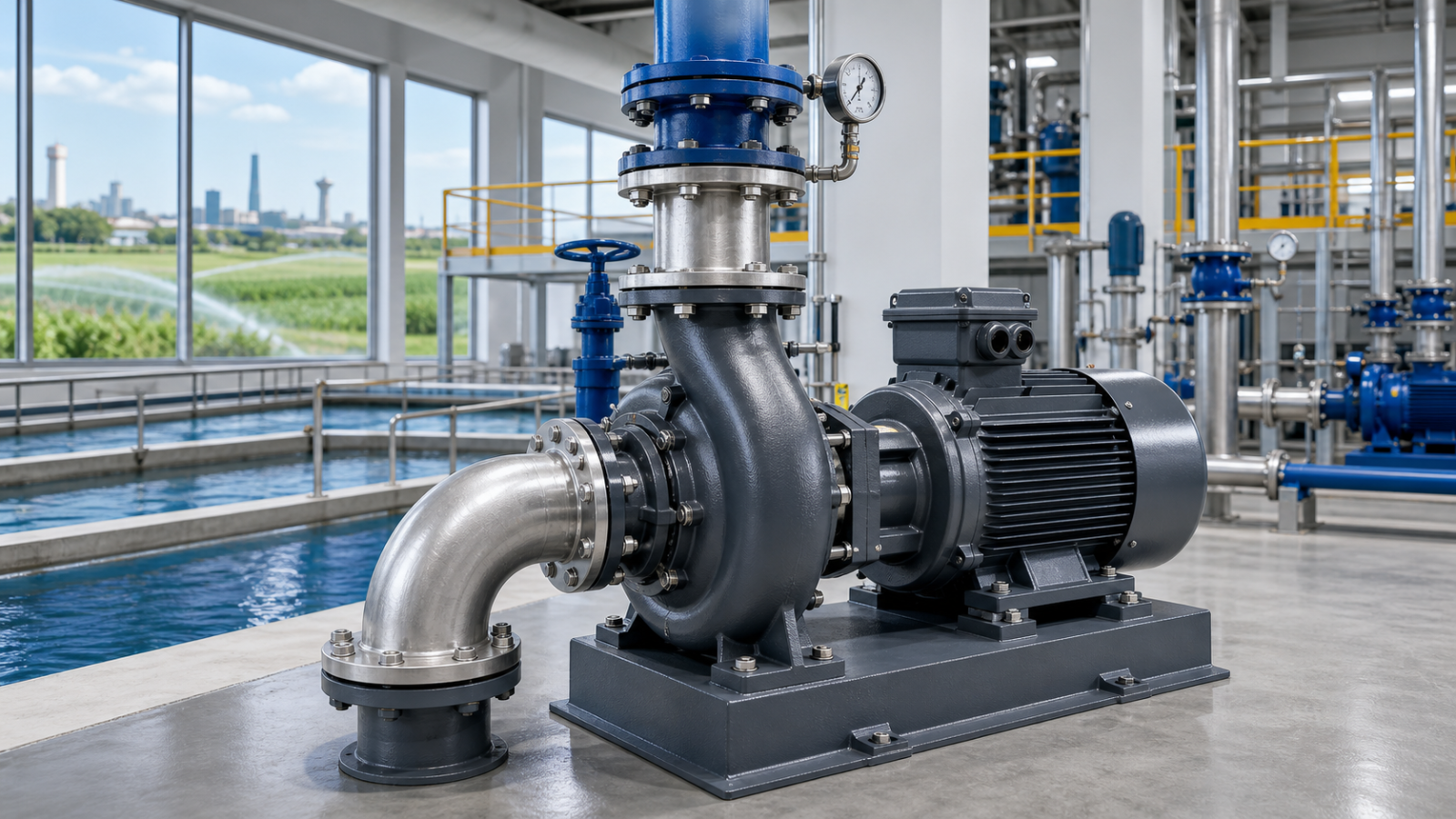
Water is the lifeblood of both agriculture and industry. As the global population grows and industrial processes expand, the demand for efficient, reliable water transport systems has skyrocketed. At the heart of these systems is the clean water centrifugal pump. This article examines the market forces driving the sales of these pumps and provides a detailed analysis of their design and functionality.
Market Dynamics: Why Clean Water Pumps Are in High Demand
The global centrifugal water pump market is a massive and growing sector. Recent market analyses value the market at approximately USD 39.87 billion, with projections indicating steady growth at a CAGR of 3.84%. The broader water pump market (including all types) was valued at USD 67.85 billion in 2024 and is expected to reach USD 95.08 billion by 2032, growing at a CAGR of 4.36%.
This sustained high demand is driven by several critical sectors:

Agricultural Irrigation: Agriculture accounts for approximately 70% of global freshwater withdrawals. Horizontal centrifugal pumps are the most common type used in irrigation systems because they are cost-effective, easy to maintain, and capable of moving large volumes of water efficiently. From flood irrigation to precision drip systems, these pumps ensure crop viability and food security. As climate change increases the need for supplemental irrigation, demand for agricultural pumps continues to grow.
Industrial Processes: Clean water pumps are ubiquitous in industrial settings. They are used for cooling tower circulation, boiler feed systems, HVAC chilled water loops, process water supply, and general utility water across manufacturing, power generation, and chemical processing plants. The efficiency and reliability of these pumps directly impact the operational costs of the facilities they serve.
Municipal Water Supply: Providing clean, pressurized drinking water to growing urban populations relies heavily on large-scale centrifugal pumping stations. From water treatment plants to distribution networks, centrifugal pumps are the primary technology used to move water from source to tap.
Construction and Dewatering: Centrifugal pumps are used extensively on construction sites to dewater excavations, tunnels, and foundations. The portability and simplicity of these pumps make them ideal for temporary dewatering applications.
Product Analysis: The Mechanics of Efficiency
Unlike slurry or sewage pumps, which are designed to handle solids, clean water pumps are optimized for one primary goal: hydraulic efficiency. They are designed to move clear liquids at high flow rates and varying pressures with the minimum possible energy consumption.
Core Design Principles
The most common design for clean water applications is the horizontal end-suction centrifugal pump.
The Volute Casing: Water enters the pump through the suction nozzle at the center (the eye) of the impeller. The casing, known as a volute, is shaped like a snail shell. As the impeller spins, it throws the water outward into the volute. The volute’s progressively expanding cross-sectional area slows the water down, converting the kinetic energy (velocity) imparted by the impeller into potential energy (pressure). This energy conversion is the fundamental operating principle of all centrifugal pumps.

Enclosed Impellers: Because the water is clean, these pumps typically use enclosed impellers—impellers with shrouds on both sides of the vanes. This design minimizes internal recirculation (water slipping back from the high-pressure discharge side to the low-pressure suction side), resulting in the highest possible hydraulic efficiency. Efficiency ratings of 80–90% are achievable with well-designed enclosed impellers.
Close-Coupled vs. Frame-Mounted Designs: Close-coupled pumps have the impeller mounted directly on the extended motor shaft, creating a compact, space-saving design ideal for tight installations. Frame-mounted pumps have their own bearing frame and are connected to the motor via a flexible coupling, which is preferred for heavy-duty industrial applications as it isolates the motor from pump vibrations and allows for easier maintenance.
Multi-Stage Pumps: For applications requiring high pressure (e.g., boiler feed, high-rise building water supply, reverse osmosis systems), multiple impellers are arranged in series within a single pump casing. Each impeller adds pressure to the water, allowing the pump to achieve heads that would be impossible with a single impeller.
| Pump Type | Typical Head Range | Typical Flow Range | Primary Application |
| Single-Stage End-Suction | 5–150 m | 10–5,000 m³/h | Irrigation, HVAC, general industry |
| Multi-Stage Centrifugal | 50–1,000 m | 1–500 m³/h | Boiler feed, high-rise water supply, RO |
| Vertical Turbine | 30–300 m | 50–10,000 m³/h | Deep well, municipal water intake |
| Self-Priming Centrifugal | 5–50 m | 5–500 m³/h | Portable dewatering, irrigation from open sources |
Table 5: Clean Water Pump Types and Typical Applications

Why Clean Water Pumps Are a Consistently Strong Seller
The clean water pump’s commercial success stems from several fundamental factors. First, water is universally required, meaning the addressable market spans every industry and geography. Second, centrifugal pumps are relatively simple machines with few moving parts, making them reliable, easy to maintain, and cost-effective to manufacture. Third, the range of available sizes—from small fractional-horsepower residential pumps to multi-megawatt municipal pumps—means there is a centrifugal pump for virtually every application.
Frequently Asked Questions
Q: What is a clean water centrifugal pump used for?
A clean water centrifugal pump is used to move clear liquids (water with no significant solids content) from one location to another. Common applications include agricultural irrigation, industrial cooling systems, HVAC water circulation, municipal water supply, and construction site dewatering.
Q: How does a centrifugal pump work?
A centrifugal pump works by using a rotating impeller to impart kinetic energy to the water. The impeller spins at high speed, throwing water outward by centrifugal force. The water then enters the volute (casing), where its velocity decreases and is converted into pressure. This pressure drives the water through the discharge pipe.
Q: What is the global market size for centrifugal water pumps?
The centrifugal water pump market is valued at approximately USD 39.87 billion and is expected to grow at a CAGR of 3.84%. The broader water pump market is projected to reach USD 95 billion by 2032.
Conclusion
The clean water centrifugal pump is a foundational technology for modern civilization. Its market strength is underpinned by its critical role in agriculture, industry, and municipal infrastructure. By focusing on hydraulic efficiency and utilizing designs like the enclosed impeller and multi-stage configurations, these pumps deliver the reliable performance required to keep water flowing worldwide.