
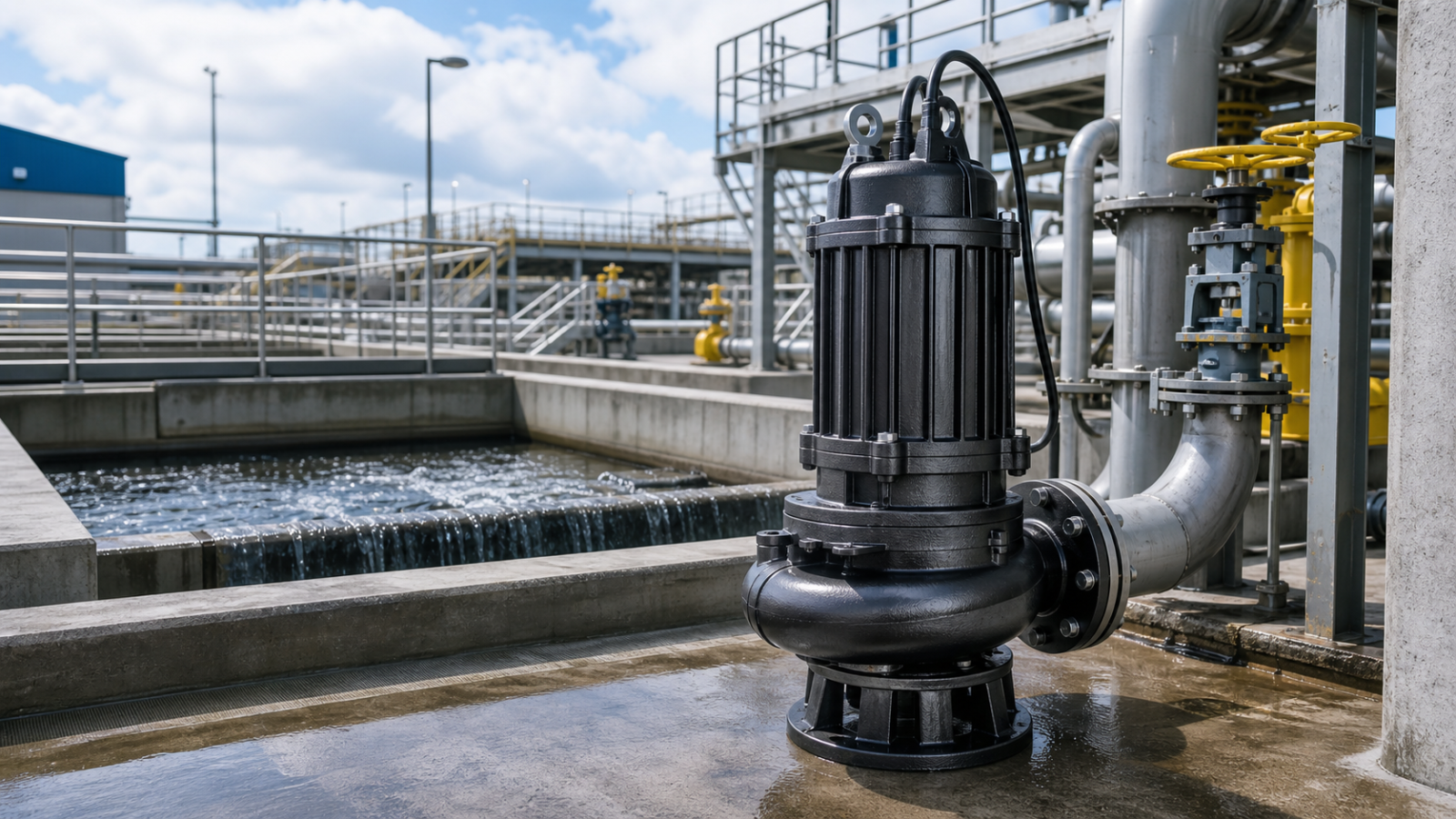
When dealing with wastewater, raw sewage, and industrial effluents, equipment failure is not an option. The reliability of a sewage pump hinges on two critical factors: selecting the appropriate materials and impeller design for the specific fluid, and adhering to proper installation and operational practices. This article provides a comprehensive technical guide to making these decisions correctly.
Material Selection: Cast Iron vs. Stainless Steel

The construction material of a sewage pump dictates its resistance to corrosion, abrasion, and overall durability. The two dominant materials in the industry are cast iron and stainless steel, each with distinct advantages.
Cast Iron: The Industry Standard for Municipal Applications
Cast iron is the workhorse material for municipal and residential sewage pumps, and for good reason.
- Structural Strength: Cast iron offers excellent structural strength and rigidity. It can withstand the physical impacts of solid waste entering the pump without deforming or cracking.
- Vibration Damping: Cast iron naturally dampens vibration and noise, which is beneficial in residential lift stations where noise is a concern.
- Cost-Effectiveness: Cast iron is significantly more economical than stainless steel, making it the practical choice for the vast majority of municipal applications.
- Applications: Ideal for standard municipal wastewater, residential sewage lift stations, and environments where the primary concern is handling organic solids rather than highly aggressive chemicals.
- Limitation: Standard cast iron is susceptible to corrosion in highly acidic or alkaline environments. In such cases, specialized epoxy coatings or alternative materials are required.
Stainless Steel: For Aggressive Industrial Environments
For industrial applications where the wastewater contains harsh chemicals, acids, or high levels of chlorides, stainless steel is the correct choice.
- Superior Corrosion Resistance: Stainless steel (typically 304 or 316 grade) provides excellent corrosion resistance across a wide pH range. Grade 316 contains molybdenum, which provides enhanced resistance to chloride pitting—critical in marine or coastal environments.
- Hygienic Properties: Stainless steel is the material of choice in food and beverage and pharmaceutical applications due to its non-porous surface, which is easy to clean and does not harbor bacteria.
- Applications: Essential for chemical processing plants, food and beverage facilities, pharmaceutical manufacturing, and any application where the wastewater chemistry would rapidly destroy cast iron.
- Limitation: Stainless steel pumps are significantly more expensive than their cast iron counterparts and can be susceptible to crevice corrosion in stagnant, high-chloride environments if not properly specified.
The Heart of the Pump: Impeller Type Selection
The impeller is the component that moves the fluid and the solids. In sewage applications, the impeller must pass solids without clogging. The selection of impeller type is one of the most important design decisions.

1. Vortex Impellers: The Clog-Free Solution
The vortex impeller is arguably the most reliable design for preventing clogs. Unlike traditional impellers, the vortex impeller is recessed into the top of the volute (pump casing). It does not push the water directly; instead, it spins rapidly to create a whirlpool (vortex) effect in the casing below it.
Because the impeller is recessed, solids—including stringy materials like rags, wet wipes, and fibrous waste—pass through the volute without ever contacting the impeller blades. This makes it virtually clog-free. The trade-off is hydraulic efficiency: vortex impellers are less efficient than channel impellers, requiring more energy to pump the same volume of water.
2. Channel Impellers (Single or Multi-Channel): Efficiency with Solids Handling
Channel impellers feature wide, enclosed passages designed to allow large solids to pass through. They offer a good balance between solids-handling capability and hydraulic efficiency. They are more efficient than vortex impellers and are commonly used in large municipal sewage pumps.
The limitation of channel impellers is their susceptibility to clogging from stringy materials that can wrap around the leading edge of the vane. Modern “anti-clog” channel impeller designs incorporate cutting edges or special geometry to mitigate this risk.
3. Cutter / Grinder Impellers: For Pressurized Systems
In applications where the discharge pipe is small (e.g., pressurized sewer mains, also called grinder pump systems) or the waste contains tough materials, a grinder pump is used. These pumps feature a rotating cutting mechanism—often manufactured from hardened high-chrome steel—at the inlet that macerates solids into a fine slurry before they enter the impeller. This allows the pump to discharge through small-diameter pipes (as small as 1.25 inches), enabling the use of low-cost, flexible piping in residential pressure sewer systems.
| Impeller Type | Solids Handling | Hydraulic Efficiency | Best Application |
| Vortex | Excellent (no contact) | Low (65–75%) | Residential, stringy waste, rags |
| Single Channel | Good (wide passage) | Medium (70–80%) | Municipal, large solids |
| Multi-Channel | Good (balanced) | High (75–85%) | Large municipal stations |
| Cutter/Grinder | Excellent (macerates) | Medium | Pressurized sewer mains, small pipes |
Table 4: Sewage Pump Impeller Type Comparison
Best Practices for Installation and Operation

1. Correct Pump Sizing
Never estimate the required pump size. Calculate the Total Dynamic Head (TDH), which includes the vertical lift (static head) and the friction loss in the pipes, valves, and fittings. Select a pump whose performance curve intersects your required flow rate at the calculated TDH.
2. Guide Rail Systems
For commercial and municipal applications, install submersible sewage pumps using a guide rail system. This allows the pump to be easily hoisted out of the wet well for maintenance without requiring personnel to enter the hazardous confined space, complying with confined space entry regulations.
3. Level Controls
Ensure float switches or level transducers are installed correctly and are free from obstruction. Incorrectly set floats can cause the pump to run dry (leading to motor burnout) or short-cycle (rapidly turning on and off, which overheats the motor and destroys the start capacitor).
4. Discharge Valves and Check Valves
Always install a check valve on the discharge line to prevent wastewater from flowing back into the pit when the pump turns off. An isolation valve (gate or ball valve) should also be installed above the check valve to allow for pump removal without draining the entire force main.
Frequently Asked Questions
Q: What type of impeller is best for a sewage pump?
For residential applications with stringy waste (rags, wipes), a vortex impeller is the most reliable choice due to its clog-free design. For municipal applications requiring higher efficiency, a single or multi-channel impeller is preferred. For pressurized sewer systems with small-diameter pipes, a grinder/cutter impeller is required.
Q: Should I choose a cast iron or stainless steel sewage pump?
For standard municipal wastewater and residential applications, cast iron is the cost-effective and durable choice. For industrial applications involving corrosive chemicals, acids, or high chloride content, stainless steel (especially 316 grade) is necessary to prevent rapid corrosion and pump failure.
Q: How do I prevent a sewage pump from clogging?
Select a vortex or anti-clog channel impeller. Ensure the pump is correctly sized (not oversized, which leads to low velocity and settling of solids). Install a screen or bar rack at the wet well inlet to remove large debris. Regularly inspect and clean the impeller during scheduled maintenance.
Conclusion
Successfully managing wastewater requires more than just buying a pump; it requires engineering a complete solution. By carefully selecting between cast iron and stainless steel, choosing the right impeller type for the specific waste stream, and following strict installation and operational guidelines, facility managers can ensure their sewage systems operate reliably and efficiently for decades.